Explorers' Club
From dinosaur bones to the farthest stars.
Five rooms of big wonders: dinosaurs, animals, the deep sea, the Earth beneath our feet, and outer space. Little ones start with play and making; older explorers dig deeper. Every lesson shows how scientists found out — so you can check it too.
Make it
Fossils, volcanoes and sock octopuses from things at home.
Go and look
Tracks in the garden, stars at night, pebbles on a walk.
Check it
Every fact comes with the evidence behind it.
Autumn colours, living habitats and a field notebook for your next walk.
The rooms
Tap a board to open its lessons. Little ones start at the top; older learners go deeper below.
Dinosaur Days
Read together
A picture book about Mary Anning, the girl who found fossils on the beach.
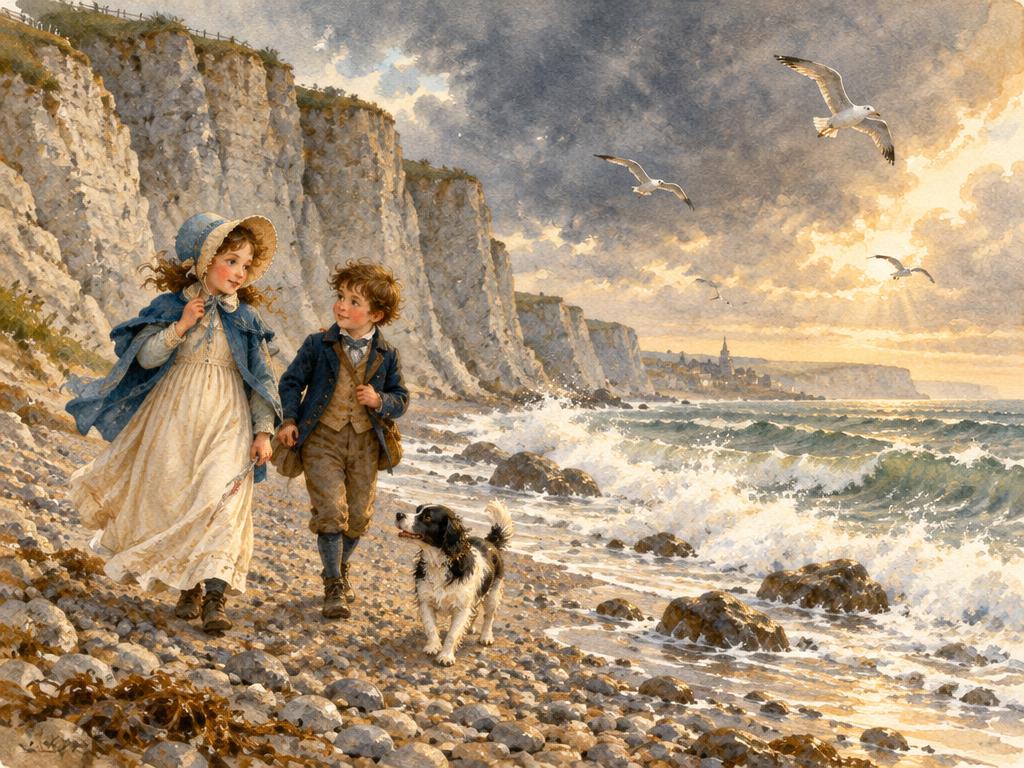 📖 Mary and the Sea DragonOpen our own book — with pictures & a reading voice →
Lesson 1
Ages 4+Big, bigger, biggest
Do it: Use string to measure how long a T. rex was (about 12 metres). Lay it out in the garden or hall.
Big idea: Some dinosaurs were longer than a bus; some were as small as a chicken.
How we know: Scientists measure real fossil skeletons. Your string is copied from those measurements.
dinosaurlongmeasureLesson 2
Ages 4+Make a fossil
Do it: Press a shell or toy dinosaur into play dough, remove it, and fill the print with plaster or salt dough.
Big idea: Fossils are prints or bones turned to stone over millions of years.
How we know: Your own print shows how a shape can stay after the thing that made it is gone.
fossilprintstoneLesson 3
Ages 5+Teeth tell tales
Do it: Compare pictures of sharp teeth and flat teeth. Guess: meat-eater or plant-eater? Check your own teeth!
Big idea: Tooth shapes show what an animal ate.
How we know: Look at a cat's teeth and a cow's teeth in photos — living animals prove the pattern.
carnivoreherbivoreteethLesson 4
Ages 6+Birds are dinosaurs
Do it: Watch a bird walk. Compare its feet to a dinosaur footprint picture.
Big idea: Birds are living dinosaurs — many dinosaurs had feathers.
How we know: Fossils of feathered dinosaurs have been found in China, with feathers pressed in stone.
featherbirdevolveLesson 5
Ages 8+Dig like a palaeontologist
Do it: Bury 'bones' (pasta) in a sand tray, grid it with string, and dig one square at a time, drawing where each piece was.
Big idea: Where a fossil is found matters as much as the fossil itself.
How we know: Deeper rock layers are usually older. Build a layer cake of sand and soil to see why.
palaeontologistlayerrecord
Calm first
Stomp slowly like a giant dinosaur, then tiptoe like a tiny one.
One kind thing
Share your fossil with someone and explain how you made it.
How do we know?
Fossils are the evidence. Scientists compare many skeletons before deciding anything.
This connects to…
Ask Foxy
Your explorer helper
Ask anything. Foxy gives hints first, then kind explanations.
Type a question below, or tap one of the ideas.